
Introduction
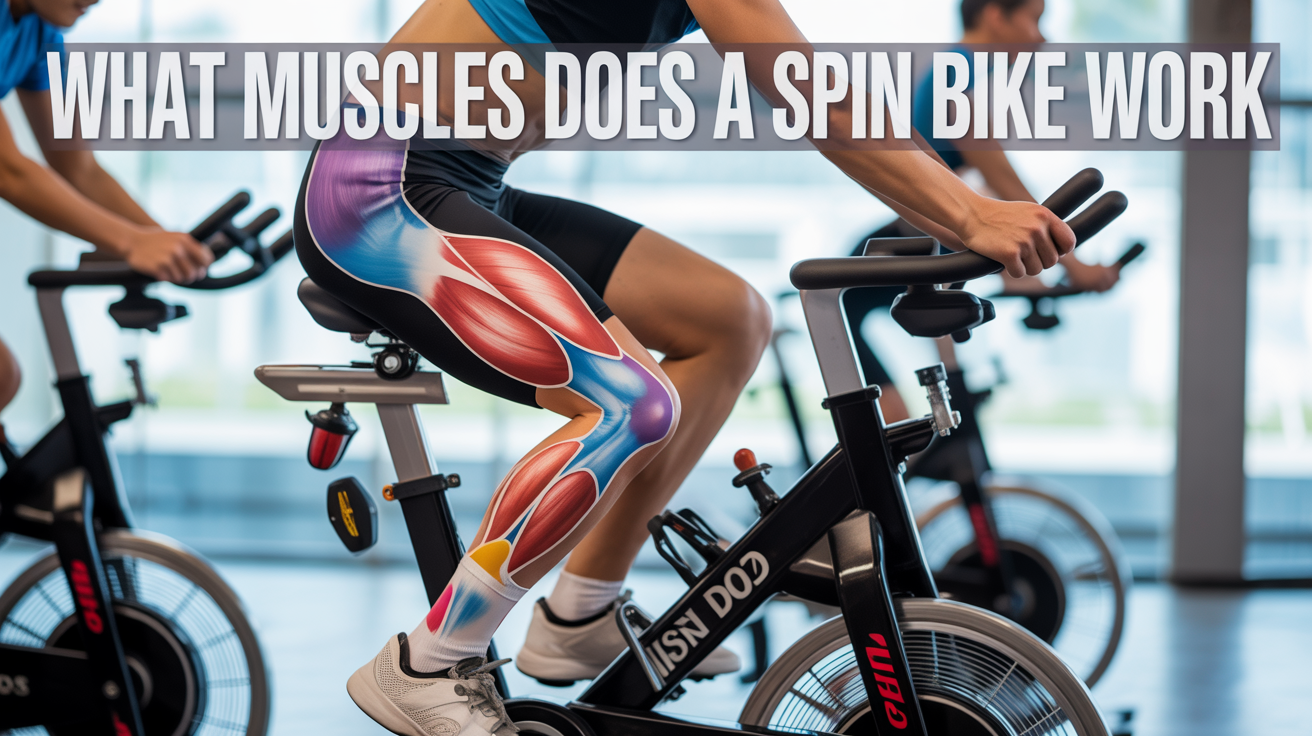
Fixed-gear mechanics, controlled cadence patterns, and adjustable resistance define spin cycling as an organized indoor cycling modality. Spin bike training is acknowledged in performance physiology and exercise science frameworks for its ability to activate postural stabilizers and lower-extremity muscles. In both athletic conditioning and general fitness contexts, knowledge of muscular recruitment patterns during spin cycling promotes training specificity, injury risk reduction, and evidence-based program design.
How Exercise on a Spin Bike Activates the Musculoskeletal System
Controlled Resistance for Whole-Body Engagement
Continuous concentric and eccentric muscle contractions are imposed by spin cycling. The flywheel’s resistance creates a mechanical load that forces prime movers and stabilizing muscles to contract in unison. Despite being categorized as low-impact activity, the sustained torque requirements result in significant force production.
Muscle Activation: Primary vs. Secondary
During pedaling cycles, the majority of propulsive force is produced by primary muscles. Effective force transmission, postural integrity, and joint stabilization are all facilitated by secondary muscles. Programming choices pertaining to neuromuscular efficiency, strength adaptation, and endurance development are supported by this distinction.
On a spin bike, the main muscles worked
Femoris Quadriceps
During the downward pedal phase, the quadriceps group serves as the dominant knee extensor. Through repeated mechanical stress, high resistance intervals increase quadriceps loading, resulting in hypertrophic and endurance adaptations.
Maximus Gluteus
Hip extension causes gluteal activation, especially when there is increased resistance or when cycling while standing. Pelvic stability is supported by sustained engagement, which also significantly increases overall power output.
Hamstring Muscle Group
The hamstrings help with the pedal stroke’s upward and posterior portions. Their function supports joint integrity and controlled cadence execution while balancing quadriceps dominance.
Muscles of the Calf
Ankle plantar flexion and pedal stabilization are facilitated by the gastrocnemius and soleus muscles. During high-cadence efforts and climbs with a lot of resistance, calf engagement increases.
Hip Flexors:
These muscles help with upward pedal recovery. Their repeated activation affects pedaling fluidity and mechanical efficiency, despite being secondary in force generation.
Activated Secondary and Stabilizing Muscles
Essential Muscles
Against forward flexion forces, the rectus abdominis, transverse abdominis, and oblique muscles preserve trunk alignment. Effective load transfer between the upper and lower kinetic chains is facilitated by core engagement.
Thoracic Stabilizers and Lumbar
During standing and sitting cycling, the erector spinae muscles maintain the position of the spine. Excessive spinal motion under repetitive loading is restricted by adequate engagement.
The muscles in the upper body
The muscles of the forearm, trapezius, and deltoids support the handlebar. When standing and shifting body mass forward, activation intensity rises.
Muscle Use with Resistance/Riding Techniques
Sitting vs. standing to ride a bicycle:
Seated riding utilizes the most quadriceps and hamstring muscles while the standing position utilizes more of the gluteal and core muscles because the center of mass changes (forward or backward) and also because the load on the saddle will change (if you stand, the load will move away from the saddle).
The high-resistance interval cycling gives rise to increased muscle strength adaptations and neuromuscular coordination, whereas sprint interval cycling increases the metabolic stress of the system. The way in which the form or skeleton is aligned (poorly or properly) also plays a role in how evenly muscle groups are utilized. In other words, if a cyclist positions the saddle and their back in a neutral position, the load will be evenly distributed across the muscle groups.
Physiological Advantages of Utilizing a Spin Bike for Muscle Engagement
1. Development of Strength in the Lower Body
Repeated exposures to resistance increase the ability of the major muscle groups in the lower leg to generate force and develop muscular endurance.
2. Stabilizing Posture and Strengthening the Core
Using the core muscles in a sustained isometric manner creates improved control over the spine and improves the ability of the body to integrate kinetic chains during cyclic movements.
3. Cardiometabolic Response to Exercise
Musculature and Cardiovascular System loading concurrently creates an enhanced ability to develop aerobic capacity and metabolic efficiency.
4. Management of Loading on Joints
By spin cycling rather than performing weight-bearing exercise, the spinning motion reduces the amount of impact force on the joints and still maintains the mechanical stimulus for muscular development.
5. Support for Muscle Endurance and Body Composition
Long duration cycle rides will contribute to the utilization of glycogen and improving the oxidative capacity of skeletal muscles.
Errors that negatively impact muscle activation
- Decreasing mechanical load on the main muscles (prime movers)
- Changing the way your knee moves by having an improper saddle height
- Making it difficult for your core muscles to activate by limiting movement of the trunk
- Putting too much weight on your arms when the bicycle is seated
High-Level Spin Training Applications
Resistance Training Blocks
Resistance training blocks provide the ability to improve lower body strength by means of progressive overload.
Endurance Workouts based upon Fortified Programs
Fatigue-proofing and post-exercise muscle recovery are promoted by alternating higher and lower intensity levels.
Integrated Conditioning Program
Spin cycling and resistance training contribute greatly to developing a well-balanced muscular system.
Comparison of Spin Bikes with other forms of stationary cycling.
Contrast of Spin Bikes versus Upright Stationary Bicycles
Spin bikes can be used on a higher range of resistance settings with the ability to be recreated in the known “standing position”, thereby providing more variety of muscle recruitment for the body.
Comparison of Spin Bikes versus Recumbent Bike
Recumbent style cycling inhibits the upper body and core muscle engagement due to the supported sitting position.
Choice of Bike Type Based On Training Goals
Spin bikes are used to train for higher performance. Other types of bikes can be utilized for rehabilitation of an injured person.
Nutritional and Recovery Aspects of Muscular Adaptation
Protein consumption and myofibrillar repair
- Electrolytes during extended workouts
- Hormonal influences on sleep and their effects on recovery
- Flexibility after training to alleviate muscle tension
The muscles that endure the most stress during a spin cycling exercise are Quadriceps, Gluteals and Hamstrings due to the continuous force required for the pedaling action.
The Abdominal Muscles are worked during spin cycling due to the need for stability within the Positioning, NOT through the movement.
Spin Cycling can produce Hypertrophy (increase in muscle size) in the Lower Body when Resistance Training and Volume of Work are used effectively.
Common Inquiries
What muscles are used most heavily during a spin class?
The three muscle groups that receive the most mechanical stress and require continuous force generation during pedalling that occur while in a spin cycling position are: quadriceps, gluteals and hamstrings.
Will spin cycling activate your stomach muscles?
The stomach muscles are engaged during the spin cycling workout by the activation of stabilisations required for proper posture while riding, but not through direct actions.
Can doing a spin cycling workout lead to increased size of your lower body muscle groups?
The increase in the size of the muscle groups will occur primarily in the lower body if they are exposed to enough resistance and training volume.
How does resistance affect the activation of the muscles?
Increased resistance increases the torque requirement, leading to greater involvement of the primary muscles of the lower extremities.
Is Spinning appropriate as a long-term strategy to develop the Musculotendinous System?
With the proper methods for recovery incorporated, Spinning will help create long-term muscular endurance and maintain strength.