
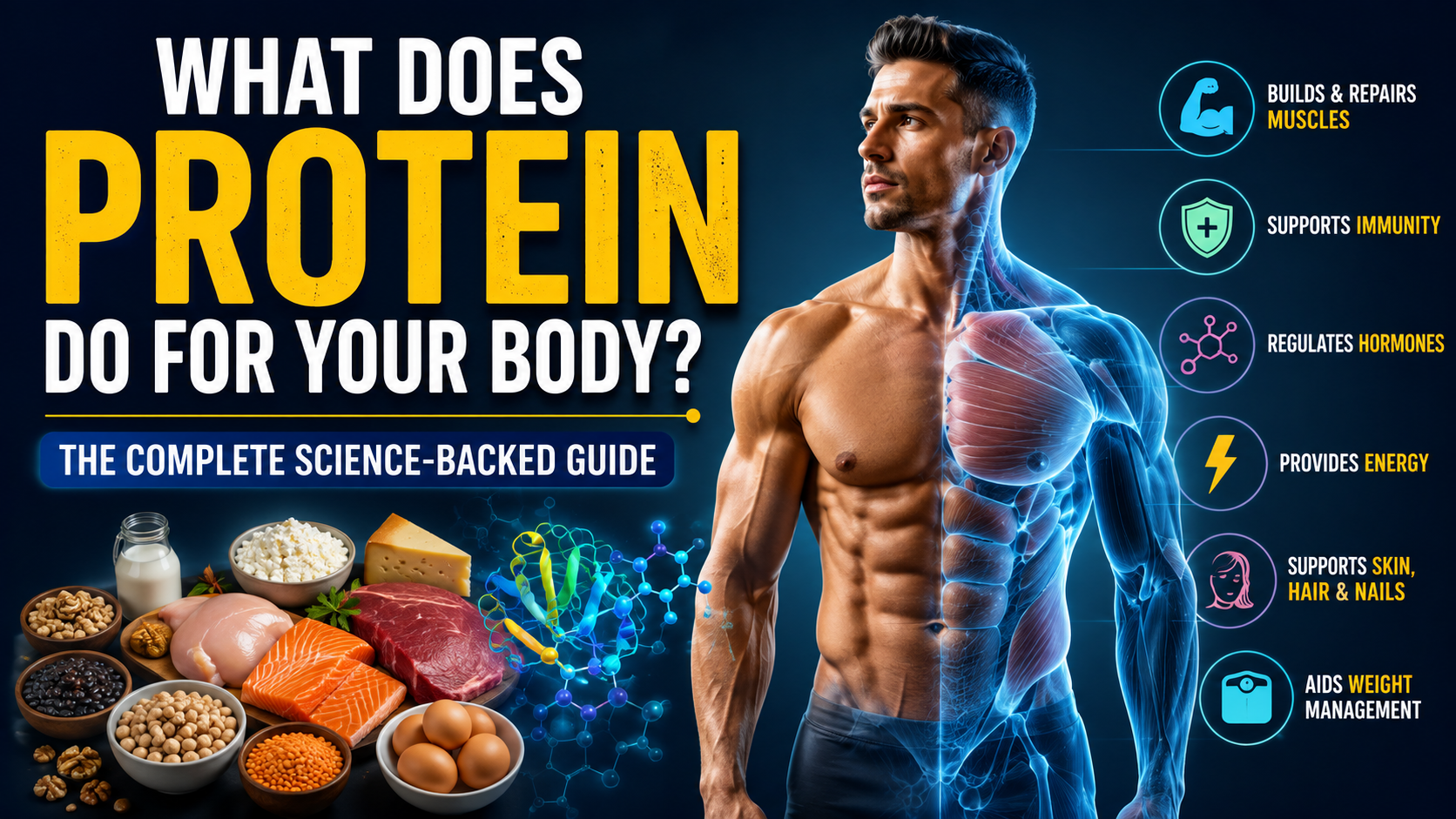
When people hear the word protein, they often picture bodybuilders drinking thick shakes or athletes eating mountains of chicken breast. But protein isn’t just a workout supplement—it is an absolute non-negotiable requirement for human life.
From the hair on your head to the enzymes digesting your dinner, protein powers virtually every biological mechanism keeping you alive. But what exactly does protein do inside your body, how does it work, and how much do you actually need each day?
This comprehensive guide breaks down the biological functions of protein, its impact on metabolism and weight loss, and how to structure your daily diet for optimal health.
What Is Protein? (The Building Blocks Explained)
To understand what protein does, you first need to understand what it is made of. Protein is one of the three primary macronutrients required by the human body, alongside carbohydrates and dietary fats.
At a molecular level, proteins are long chains of smaller organic compounds called amino acids. Think of amino acids as individual Lego bricks. Your body uses 20 different amino acids to construct thousands of unique protein structures, each serving a specific job.
Animal vs. plant complete protein sources. Source: Swanson Vitamins
Essential vs. Non-Essential Amino Acids
The 20 amino acids are categorized into two main groups:
- Essential Amino Acids (9 total): These cannot be synthesized by your body. You must get them through your daily diet (e.g., leucine, isoleucine, valine, lysine).
- Non-Essential Amino Acids (11 total): Your body can produce these on its own using other nutrients, even if you don’t consume them directly.
A food that contains all nine essential amino acids in adequate amounts is called a complete protein (such as eggs, poultry, fish, dairy, soy, and quinoa). Foods missing one or more essential amino acids are known as incomplete proteins (such as beans, lentils, nuts, and grains).
7 Vital Functions: What Does Protein Do for Your Body?
1. Rebuilds and Repairs Muscle Tissue
Every time you lift weights, go for a run, or perform physical labor, you create microscopic tears in your muscle fibers. Your immune system signals specialized cells to repair this damage through a process called Muscle Protein Synthesis (MPS).
Protein provides the raw amino acid building blocks required to patch up these micro-tears. Over time, this repair process makes your muscles stronger, firmer, and more resilient. Without adequate dietary protein, your body cannot recover effectively, leading to prolonged soreness, loss of lean mass, and potential injury.
2. Produces Essential Enzymes and Hormones
Enzymes are specialized protein molecules that drive thousands of chemical reactions inside your body every single second. Without enzymes, basic life functions like digestion and energy production would halt.
- Digestive Enzymes: Proteins like amylase, lipase, and protease break down carbs, fats, and proteins in your gut so your body can absorb them.
- Hormonal Messengers: Many critical hormones are protein-based peptides. For instance, insulin regulates blood glucose levels, while growth hormone (GH) stimulates tissue development.
3. Boosts Metabolism Through the Thermic Effect of Food (TEF)
Did you know that eating protein actually burns calories? This happens through the Thermic Effect of Food (TEF)—the metabolic energy required to digest, absorb, and process nutrients.
- Fats: 0% – 3% of calories consumed are burned during digestion.
- Carbohydrates: 5% – 10% of calories consumed are burned.
- Protein: 20% – 30% of calories consumed are burned during digestion!
This means if you consume 100 calories of protein, your body burns roughly 20 to 30 of those calories just breaking it down. This built-in metabolic advantage makes high-protein diets exceptionally effective for fat loss and weight management.
4. Increases Fullness and Reduces Appetite
If you struggle with constant hunger or late-night cravings while trying to lose weight, protein is your best defense. Protein influences your body’s hunger hormones in two distinct ways:
- Suppresses Ghrelin: It significantly lowers levels of ghrelin, often called the “hunger hormone.”
- Elevates Satiety Signals: It stimulates the production of hormones like GLP-1, peptide YY, and cholecystokinin (CCK), which signal to your brain that you are full.
Studies consistently demonstrate that replacing refined carbohydrates with lean protein sources leads to automatic calorie reduction without intense feelings of deprivation.
5. Strengthens Bones, Hair, Nails, and Skin
When people think of bone health, calcium usually gets all the credit. However, about 50% of bone volume is actually made up of a protein matrix called collagen. High protein intake supports bone mineral density, reducing the risk of osteoporosis and fractures as you age.
Furthermore, keratin (the structural protein forming your hair and nails) and collagen/elastin (which maintain skin elasticity and youthfulness) rely directly on a continuous supply of dietary amino acids.
6. Supports Immune System Defense
Your immune system relies on proteins to defend against bacteria, viruses, and pathogens. Antibodies—the specialized Y-shaped defense proteins that recognize and neutralize harmful invaders—are built entirely from amino acids. A chronic deficiency in protein weakens antibody production, leaving your body far more vulnerable to infections and slow wound healing.
7. Maintains Fluid and pH Balance
Protein plays a quiet but critical role in maintaining fluid balance within blood vessels and tissues. Blood proteins like albumin and globulin keep fluid inside your bloodstream by attracting water. If you don’t consume enough protein, fluid can leak into surrounding tissue spaces, leading to swelling (a condition known as edema).
Additionally, blood proteins act as buffers to keep your body’s pH levels within a strict, healthy range (around 7.4).
How Much Protein Do You Need Daily?
Your personal daily protein requirement depends on your body weight, activity level, age, and health goals.
The minimum Recommended Dietary Allowance (RDA) for a sedentary adult is 0.8 grams per kilogram (0.36g per pound) of body weight. However, it is critical to note that the RDA is designed merely to prevent deficiency—not to promote optimal health, athletic recovery, or lean muscle growth.
Daily Protein Intake Requirement Chart
| Activity Level / Goal | Daily Protein Target (per lb of body weight) | Daily Protein Target (per kg of body weight) | Example Goal for a 160 lb (72 kg) Individual |
| Sedentary Adult (Minimal movement) | 0.36 – 0.50 grams | 0.8 – 1.1 grams | 58g – 80g / day |
| Active Adult (Cardio/Light Exercise 3x/week) | 0.55 – 0.70 grams | 1.2 – 1.5 grams | 88g – 112g / day |
| Fat Loss & Toning (Calorie deficit + Resistance training) | 0.75 – 0.90 grams | 1.6 – 2.0 grams | 120g – 144g / day |
| Muscle Building & Athletes (Heavy strength training) | 0.80 – 1.00+ grams | 1.8 – 2.2+ grams | 128g – 160g+ / day |
| Older Adults (60+ yrs) (To prevent sarcopenia/muscle loss) | 0.55 – 0.75 grams | 1.2 – 1.7 grams | 88g – 120g / day |
Best Whole-Food Protein Sources (Per Portion)
To hit your daily targets, aim to distribute your protein intake evenly across 3 to 4 meals throughout the day. Below is a practical guide to top whole-food sources:
| Protein Source | Serving Size | Approximate Protein Content | Protein Quality |
| Chicken Breast (cooked) | 3.5 oz (100g) | 31 grams | Complete |
| Whey Protein Isolate | 1 scoop (30g) | 24–26 grams | Complete |
| Salmon (cooked) | 3.5 oz (100g) | 22 grams | Complete |
| Greek Yogurt (plain, non-fat) | 3/4 cup (170g) | 17 grams | Complete |
| Eggs | 2 large eggs | 12 grams | Complete |
| Tofu (firm) | 3.5 oz (100g) | 10 grams | Complete |
| Lentils (cooked) | 1/2 cup (100g) | 9 grams | Incomplete |
| Cottage Cheese (low-fat) | 1/2 cup (110g) | 14 grams | Complete |
Summary
Protein is far more than a nutrient for athletes—it is the master driver of metabolic rate, muscle recovery, hormone production, bone density, and appetite regulation. Whether your goal is shedding body fat, building strength, or maintaining health as you age, getting 0.7 to 1.0 grams of quality protein per pound of target body weight daily is one of the most powerful dietary
habits you can build.
Where would you like to take this content next?
Generate SEO titles, meta description, and keywords
Create a 7-day high-protein meal plan